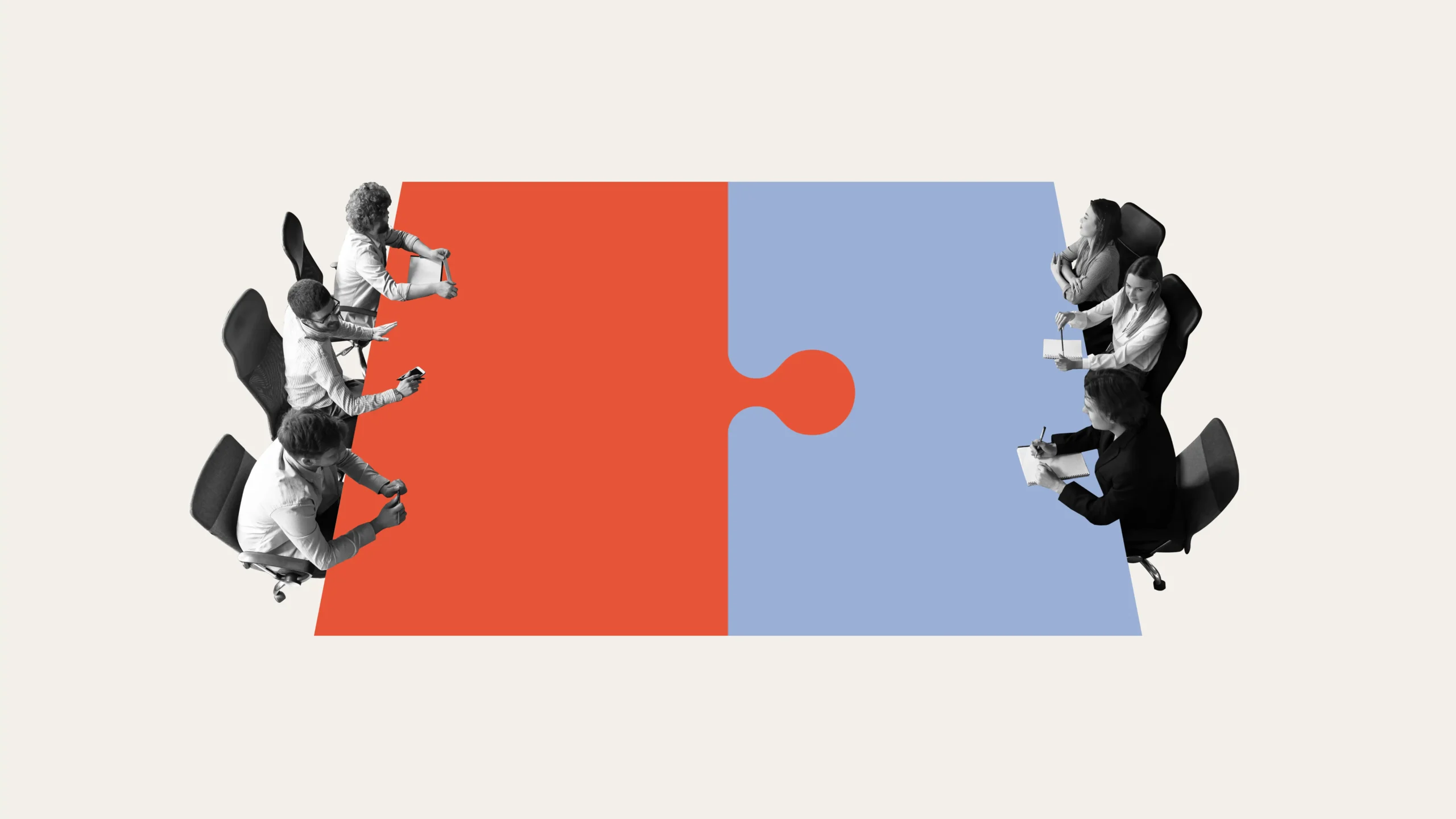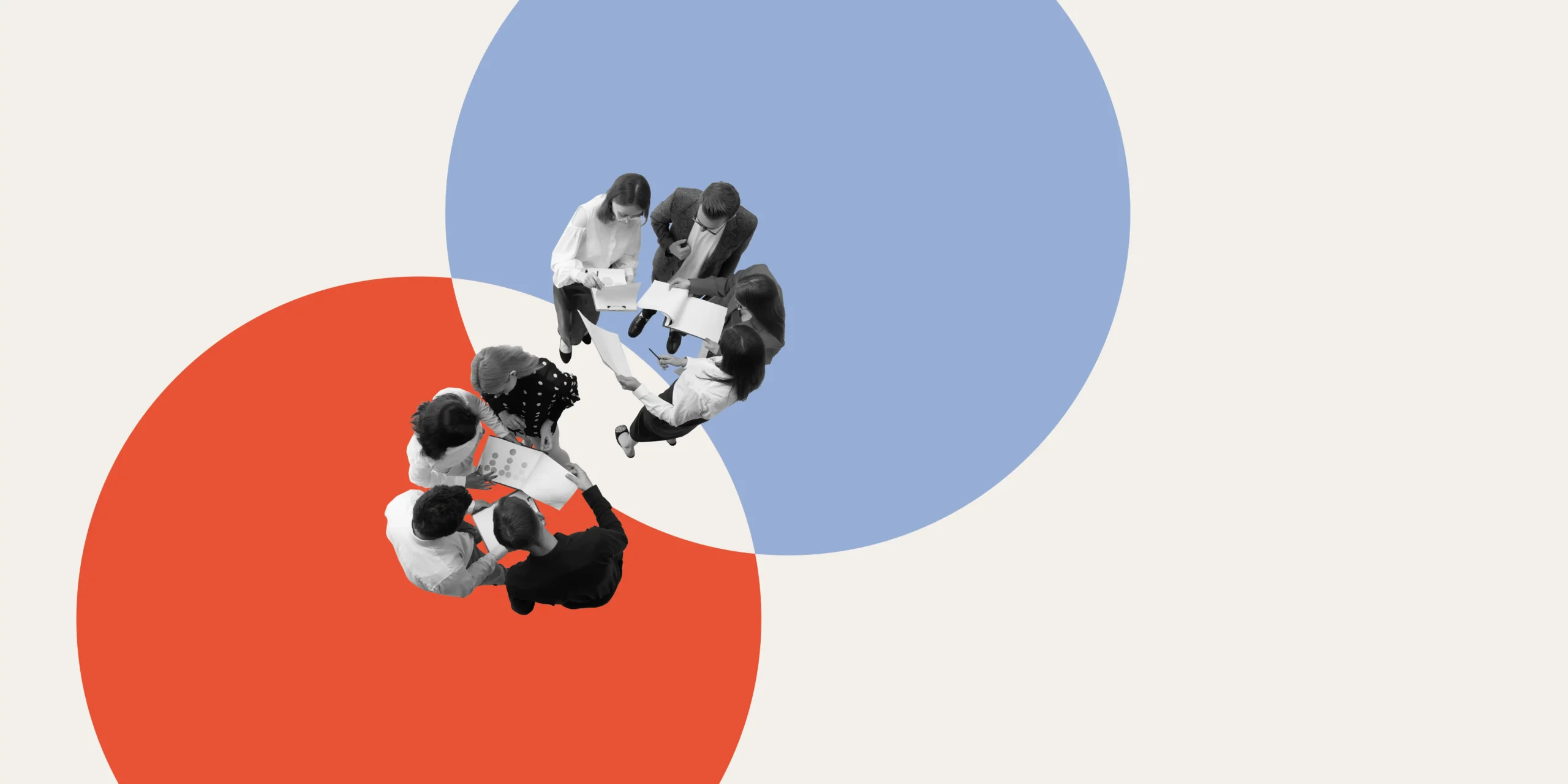

Picture a strategy meeting where you need to agree on your focus for the next quarter. One colleague wants to reach a decision within ten minutes and grows impatient if the meeting drags on. Another would rather spend an hour weighing every scenario before saying anything final out loud. Neither of them is “right” – they’re simply driven by different needs. This is exactly the kind of difference a DiSC profile makes visible and easier to work with.
A DiSC profile is much more than a personality test. It’s a practical development tool that gives you greater insight into yourself and your colleagues – how you react under pressure, what motivates you, and how to recognise the same patterns in others, so collaboration becomes easier instead of a source of misunderstanding.
“What I most often hear from leaders isn’t ‘what’s my profile’, but ‘why does my colleague react so differently from me in the same situation’. That’s the question DiSC actually answers,” says Anni Vind Frandsen, partner at People & Performance.
DiSC provides insight – and action
The DiSC model consists of four behavioural styles: Dominance (D), Influence (i), Steadiness (S) and Conscientiousness (C). We all have a mix of each, but under pressure, certain patterns tend to become more dominant – and that’s where the model becomes genuinely useful in practice, because the four styles respond differently to the very same situation:
An employee with high D will often, in a status meeting, see long background reviews as a waste of time and ask “what’s the conclusion?” before the rest of the group is ready. An employee with high i will typically think out loud and contribute ideas as they go – and may read silence in the room as a sign that something is wrong. An employee with high S will often wait to share their opinion until everyone else has spoken, and may see fast decisions as a lack of consideration for the consequences. An employee with high C will typically ask detailed questions about data and assumptions – and can come across as slowing things down, even though they simply want to make sure the decision holds up.
Once you know your own profile and your colleagues’, you can translate what otherwise feels like irritation or misunderstanding into something concrete: you understand why it’s happening, and you can adjust your own communication accordingly – without anyone needing to change who they are.
“It’s a trap to think we all see the world the same way. When you put words to the differences instead of letting them create friction, they become a resource in the collaboration instead of an obstacle,” says Anni Vind Frandsen, partner at People & Performance.
That shift from behaviour to action is exactly what we work with in our DiSC programmes – whether it’s a single profile or an entire team that needs a shared language.
Strengthen collaboration with DiSC
Collaboration is essential in every workplace – yet it’s rarely something we work on deliberately. This is where DiSC can make a real difference.
Picture two colleagues working together on a project: one with high D, one with high S. The D keeps suggesting “let’s just get started and adjust along the way.” The S grows uneasy with that approach, because it feels like acting without a plan, and starts to hold back from contributing. From the outside, it might just look like a clash of working styles. With a shared DiSC vocabulary, they can instead name what’s actually happening: the D needs a few fixed reference points before diving in, and the S needs to accept that the plan can be adjusted along the way. Neither of them needs to fundamentally change – they just need to understand what the other needs in order to feel safe in the collaboration.
“We often forget that a good solution requires collaboration, because we’re so focused on the task itself. DiSC shifts the focus to what we otherwise take for granted: the relationships that have to carry the work through,” says Anni Vind Frandsen, partner at People & Performance.
When differences are recognised and understood rather than becoming a source of frustration, synergy emerges instead of tension – not because everyone becomes the same, but because everyone knows what the others need.
Gain new perspectives on change
Change can be necessary, but also challenging – and under pressure, our behavioural patterns tend to become more pronounced, because we gravitate towards what we know best.
An employee with high C will typically ask for more information and a clear plan before a change is rolled out – not because they’re against the change, but because a lack of information feels risky. An employee with high i, by contrast, will often already be talking the change up to colleagues before all the details are in place. If a leader only has their own style as a reference point, one group can easily be seen as “obstacles” and the other as “irresponsible” – even though both are simply reacting naturally according to their own profile.
“Under pressure, we tend to gravitate towards what we know. DiSC gives us a language for why we – and others – react differently during change, so we can meet resistance with curiosity instead of frustration,” says Anni Vind Frandsen, partner at People & Performance.
With a DiSC profile in hand, it becomes easier to see how each of you handles uncertainty – and how, as a team, you can keep moving forward together, even through setbacks.
Become a stronger version of yourself
DiSC doesn’t just give you insight into your own patterns – it also shows you how you’re perceived by others.
A leader with high D, who is used to making quick decisions in order to move forward, might find that employees with high C need more time and more detail before they feel confident in a decision – and may mistakenly read that need as resistance rather than diligence. That insight makes it possible to adjust: not to become a different type, but to become more flexible in how you meet different people in different situations.
“DiSC doesn’t just show us who we are – it also shows us what we can get better at adjusting when meeting others. That’s where the tool becomes valuable – not in the test itself, but in how you use it afterwards,” says Anni Vind Frandsen, partner at People & Performance.
Together, these four areas are about the same thing: turning differences into something you can act on together – rather than something that creates friction.
Do you want to work actively with your DiSC profile?
At People & Performance, we offer both individual feedback sessions and team programmes based on Everything DiSC – tailored to those who want to strengthen collaboration, communication and leadership.
You can also visit our webshop to explore the specific DiSC products we offer – both with and without facilitation.