
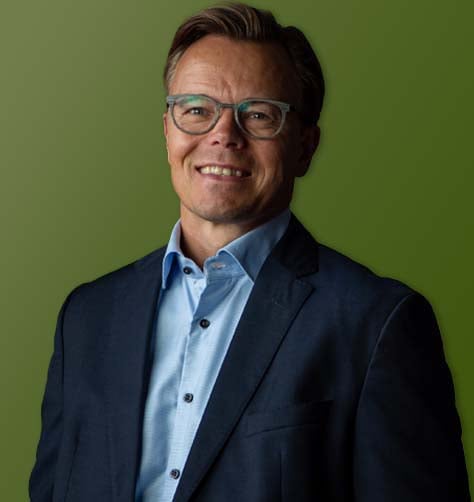
As Maersk Tankers was undergoing a strategic transformation while also integrating two companies around a shared future, one thing quickly became clear: culture was not just a supporting element. It was the very foundation for success.
But how do you move from ambitions for a stronger culture to something that actually changes behaviour across a global organisation?
That question marked the beginning of the collaboration with People & Performance.
A strategic shift required more than new ambitions
With a new CEO and a merger with a company that expanded its portfolio, Maersk Tankers found itself in a situation many organisations can relate to, but few manage to navigate successfully.
Two different cultures had to be brought together. Not by choosing one over the other, but by creating something new.
The aim was to develop a new way of working – a shared model rooted in the culture they wanted to build for the future. “We wanted to take the best of both worlds without simply combining everything into one new version,” explains Chief People Officer i Maersk Tankers Anette Papuga.
At the same time, Maersk Tankers was still shaped by its past as part of a much larger group. Processes and structures that made sense in a global giant proved less suitable for an organisation of around 300 employees.
As Anette Papuga puts it: “Running corporate processes in a 300-person organisation is not particularly good business.”
The ambition was clear. The organisation needed to work in a more agile and connected way, with a stronger shared direction under the “One Team, Second to None” strategy.
But ambitions alone do not change behaviour.
Making culture work in everyday practice
The leadership team had already taken the first steps and defined the direction for the desired culture through five Cultural Aspirations. The challenge was to make them concrete – not just easy to understand, but useful in everyday work and rooted in the best of both companies.
If employees and leaders cannot see what culture means in practice, it quickly becomes something that lives in PowerPoint decks. Not in the organisation.
This is where People & Performance came in, bringing extensive practice- and research-based experience in culture development. Our approach makes the abstract tangible by linking culture directly to behaviour and leadership.
The approach is based on research into the relationship between culture, leadership and performance, making it possible to work systematically with the drivers that influence behaviour in organisations.
Rather than presenting a ready-made model, the process was designed around the organisation’s own reality. Through interviews across the organisation, perspectives, experiences and concrete examples were gathered – not only to analyse the culture, but also to actively begin shaping it.
“The direction we had defined as a leadership team was tested and refined with colleagues from different parts of the business. Does what we’ve written make sense? Can they give examples from everyday work of what it means?” Anette Papuga says of the process.
In this way, the culture work did not become an exercise in wording, but a process in which the organisation gradually developed a shared understanding of what the desired direction actually meant in practice.
Involving the whole organisation to accelerate progress
Many organisations find that involvement takes time. At Maersk Tankers, the opposite proved true.
By actively involving the organisation early in the process and in different ways, Maersk Tankers was able to build curiosity and reduce some of the resistance that often arises when new initiatives are rolled out.
“To accelerate the change, we chose to involve employees,” says Anette Papuga.
Leaders were not simply introduced to a new culture. They were made responsible for translating it into their own context. With concrete assignments, they returned to their teams to work through what the new aspirations meant in practice – from mindset and behaviour to new ways of working.
This changed the dynamic significantly.
As Anette Papuga describes it: “When we started the training, there was broad support because we had done the necessary groundwork.”
Involvement, often seen as a time-consuming process, instead proved to be an accelerator.
Culture is shaped through leadership, not intentions
From the outset, there was a clear understanding that culture does not develop on its own. It requires ongoing attention and conscious choices in everything leaders do and say – and in what they choose not to do. Culture is expressed and shaped every day through actions, decisions, priorities and the way leaders and colleagues work together.
This led to a targeted development programme for the organisation’s leaders, with intensive, participatory and theme-based workshops – both in person and online. Not as a traditional training programme, but as an integral part of working with the company’s culture, strengthening collaboration across the organisation and translating ambitions into concrete employee and leadership behaviours.
At the same time, the entire organisation – leaders and employees – was involved through Master Classes, where employees played an active role in understanding and contributing to the desired culture and linking it to their own development in the process.
“The new culture is a shared responsibility, not just the leader’s. It is a collective effort that is critical to delivering our strategy,” emphasises Anette Papuga.
This creates an important balance: leaders take responsibility for driving the change, while the organisation gains a shared language, stronger relationships and a common understanding that enables everyone to contribute actively. Employee involvement also creates positive pressure on leaders to keep making the strategy and cultural aspirations tangible in everyday work.
When the change starts to be felt
Although the work is still ongoing, the first signs of change are already visible.
Relationships across the organisation have strengthened, and the way people work together is beginning to shift.
“Our silos are gradually disappearing,” says Anette Papuga.
In a culture transformation, measurable KPIs are not necessarily the first things to change. Everyday behaviour is. How people reach out to one another. How decisions are made. How responsibility is taken.
And that is exactly where the foundation for long-term results is laid.
When culture becomes something you do
The Maersk Tankers case highlights an important point. Culture change does not succeed because you have the right words or intentions.
It succeeds when the organisation is enabled and expected to turn words into action – and when it stays the course. The strength lies in adapting along the way.
That requires culture to be concrete. It must be linked to behaviour and underpinned by a clear purpose. And leaders need to take active ownership of bringing it to life.
Only then is culture no longer just something you talk about.
But something you do.