Guide · Change management
Change management: How to lead your organisation through change
Updated October 2026 · Reading time approx. 10 minutes
In brief
Change management is the ability to lead people through change so that it is carried out and embedded in everyday work. It is less about plans and systems and more about creating understanding, motivation and the ability to act among those who need to change. In this guide, you get a five-step model, six parameters for assessing change readiness and a checklist for leaders. The guide builds on People & Performance's experience with change management since 2007.
Contents
What is change management?
Change management is the ability to lead an organisation and its employees through a change process – from the decision to change until the new practice is a natural part of everyday work. It places demands on leaders, who need knowledge of how change unfolds and the skills to mobilise the people who will drive it.
The leader's role
Change management requires a different understanding of the leadership role. As a leader, you are not the all-knowing hero who has worked out the answer and must lead employees to a new state. You are also a person who needs to understand and handle the change – in dialogue with your employees. That takes an open mind and practical tools.
Why change has become the new normal
Today, companies must be able to adapt quickly to changing conditions, and in many industries change cycles have become shorter. Three forces affect all companies across industries and borders:
- Intense competition
- The pace of technology and digitalisation
- Increasing internationalisation
In the past, only a few changes were under way at the same time. Today there are many, and they come at shorter intervals. Change has therefore become a condition rather than a project – and the ability to keep up can be decisive for a company's competitiveness.
Four shifts in modern change management
Change management has moved from systematic implementation to something that is about values and relevance. Four shifts describe the change:
From systems → to values
Change today is less about new systems and more about culture, ways of working and the ability to innovate.
From vision → to a mandate to act
A vision for top management is not enough. Employees need the mandate and the motivation to act.
From burning platform → to relevance
Urgency has lost its effect. Communication must show why the change is relevant to each person.
From final destination → to a stable state
Change is a movement from one stable state to another. Also explain what will not change.
Change management in five steps
The model brings together what we see working in practice. The steps overlap, and you will often return to an earlier step along the way.
Step 1
Understand the scope and nature of the change
What does the change alter in processes, technology, roles, responsibilities, culture and attitudes? Put yourself in the participants' shoes: How far-reaching is the change for them, what energy does it require, and what value does it bring?
Step 2
Assess change readiness
Use the six parameters below to see where your employees stand and where you need to focus.
Step 3
Involve the organisation and use ambassadors
Involve people as early and as much as possible. Employees are motivated by getting close to the core of the business, and in almost every change there are employees who welcome it and can drive it forward.
Step 4
Communicate relevantly – again and again
Agree in advance on what and how you will communicate. Use every opportunity to explain the change, and speak directly to employees about what it means for them. Also explain what will not change. That gives people something to hold on to.
Step 5
Learn and embed along the way
Change can rarely be fully planned. Gather experience, adjust, and make sure leaders and employees gain the skills the new practice requires.
How to assess change readiness
Change readiness is your employees' starting point for accepting and carrying out a change. You can assess it using six parameters:
Understanding
Do employees understand why the change is necessary – and why it is happening now?
Motivation
Can they see what the change gives them? If the benefit lies mainly with the company, explain why.
Responsibility
Does each employee have a specific task they are responsible for in the change?
Skills
Do they have the skills the change requires – and is there a plan for how they will get them?
Information flow
Do they get the right information at the right time – neither too much nor too little?
Support
What does each person need: new skills, relief, resources or expertise?
Once you know the answers, you know where it makes most sense to focus.
When change meets resistance
Many leaders fear the reactions when a change is launched – the critical questions and the resistance that may arise. But reactions are information. Without them, you have no feel for the organisation and are leading the change blind.
In most cases, critical questions are not resistance but engagement from an employee who needs to understand the terms of the change. Resistance more often arises when everything changes at once and employees lack stable reference points. The consequences can be talent loss, stress and demotivation. That is why it is important to give employees ownership and create stability along the way.
From change management to change learning
As the speed, complexity and number of changes increase, it is no longer possible to plan and predict a change in full. That is why we talk about change learning rather than change management.
Change management
The leader guides employees through a planned change by implementing new processes and tools.
Change learning
Leader and team build new understanding together along the way. The leader enables employees to create the change themselves.
Change learning requires closer dialogue between leaders and employees, a team willing to take risks, and a mandate for both team and leader to act. It applies especially to changes involving innovation or new ways of working and business models.
Train the organisation's learning agility
A culture that is ready for change is built by practising change. Work with learning agility: every leader and employee has something they are developing in – for example through job rotation, new tasks or project work. The idea is simple: you develop people to develop the business. This is where leadership development plays a central role.
Common mistakes in change management
Only top management knows the vision
Employees are informed but not given a mandate to act.
The burning platform has to do all the work
Urgency alone does not create engagement. Relevance to each person does.
The change is communicated once
Repetition and direct communication create a sense of security.
Everything changes at once
Without stable reference points, uncertainty and resistance grow.
Reactions are seen as resistance
Critical questions are often a sign of engagement.
Skills are forgotten
Employees are expected to work in a new way without having learned how.
Case: Culture change at DSB
How do you create culture change in an organisation with 7,000 employees? DSB, the Danish State Railways, has worked on turning strategy and culture into concrete leadership actions that strengthen accountability, collaboration and behaviour in everyday work. More than 280 leaders have taken part in the programme.
Our leaders talk about their responsibility in a different way, and they take a much more active lead on the changes.
Ann Marie Jakobsen, Director of HR, DSB
Another case: From two cultures to one direction: How Maersk Tankers built the foundation for "One Team" (in Danish) →
Checklist for leaders
Use the checklist before you launch the change – and return to it along the way.
✓I can explain why the change is happening – and why now.
✓I know what the change means for my employees, and what will stay the same.
✓I have assessed change readiness using the six parameters.
✓Each employee has a specific role or task in the change.
✓I have identified ambassadors who can drive the change.
✓We have a communication plan that is repeated and adjusted along the way.
✓We have a plan for the skills the new practice requires.
✓I listen to reactions and use them to adjust.
Frequently asked questions about change management
What is change management?
+
Change management is the ability to lead an organisation and its employees through change so that it is carried out and embedded in everyday work. It is about creating understanding, motivation and the ability to act among those who need to change.
What is the difference between change management and change learning?
+
Change management is about leading employees through a planned change. Change learning starts from the fact that many changes cannot be fully planned, and focuses on building new understanding together with employees along the way.
How do you assess change readiness?
+
Using six parameters: understanding, motivation, responsibility, skills, information flow and support. They show where employees stand and where the leader needs to focus.
How do you handle resistance to change?
+
See reactions as information. Critical questions are often engagement from employees who want to understand the change. Give ownership, communicate relevantly and repeatedly, and explain what will not change.
What is the leader's role in a change?
+
The leader must create direction and meaning, involve employees and ensure the right conditions and skills are in place. In larger and more complex changes, the role is increasingly about enabling employees to create the change themselves.
Can People & Performance help with change management?
+
Yes. We help leaders and management teams lead change – from assessing change readiness to leadership development and embedding. We work across Denmark from our offices in Copenhagen and Aarhus, and internationally.
How we can help
Get help with your change
Leadership development→Management team development→Strategy development→
Facing a change?
Talk to Kasper
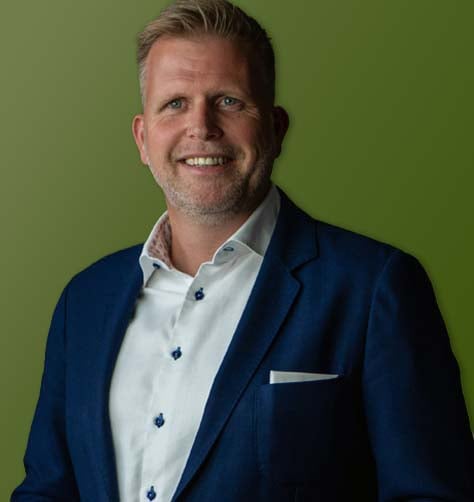
Kasper Urth, COO & Co-founder
Kasper works with business-critical and leadership challenges and helps organisations deliver on their strategic ambitions. Tell us what you are facing, and we will set up a no-obligation conversation.